Where Have All the Apprentices Gone? The Mentorship Crisis Threatening Glassblowing's Future
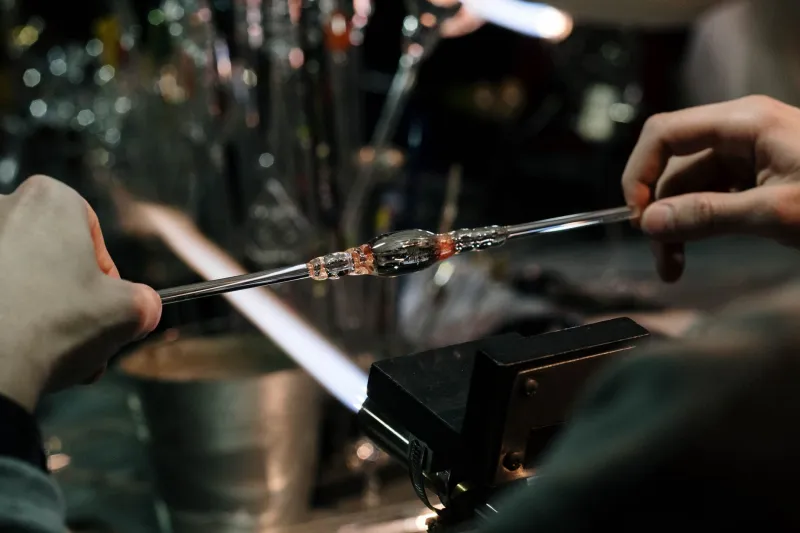
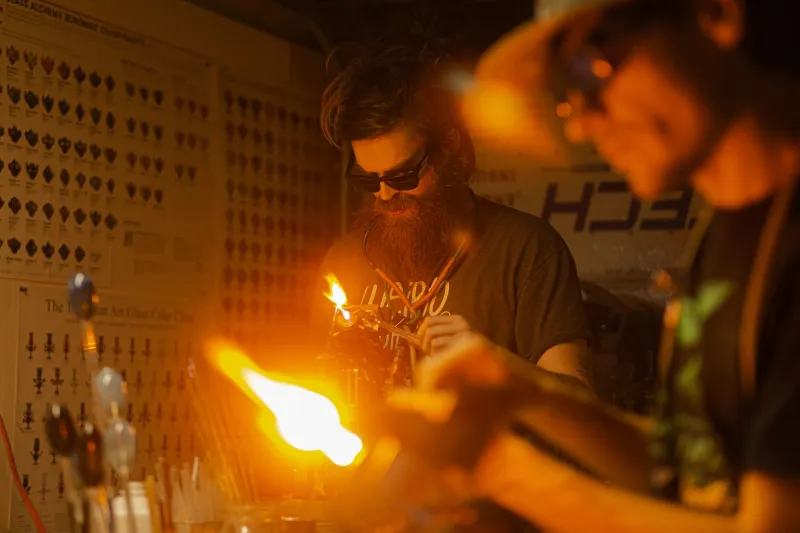
Walk into almost any working hot shop in America right now and ask the owner about finding good apprentices. Odds are, you'll get a long pause, maybe a slow exhale, and then some version of the same answer: it's getting harder every year.
This isn't just grumbling from old-timers resistant to change. The traditional glassblowing apprenticeship — where a dedicated student spends years shadowing a master, absorbing technique through repetition and proximity — is under real pressure. The pipeline of committed, long-term mentees entering American studios has been thinning out for over a decade, and the people who depend on that pipeline to keep the craft alive are starting to get genuinely worried.
So what's actually going on?
The Cost Problem Nobody Wants to Talk About
Let's start with the obvious one. Glassblowing is not a cheap craft to learn. Even in an apprenticeship setting — where you're theoretically trading labor and time for instruction — the financial burden on a new student can be brutal.
Most formal apprenticeships don't pay a living wage, at least not in the early stages. Some pay nothing at all. Meanwhile, the apprentice is expected to show up five or six days a week, often pulling long shifts in a physically demanding environment. Rent doesn't pause while you're learning to gather glass. Student loans don't care that you're developing your color overlay technique.
"I had two people drop out on me in the last three years, and both of them were genuinely talented," says Marcus Delgado, who runs a mid-sized production studio in Asheville, North Carolina. "It wasn't that they didn't love the work. They just couldn't afford to keep doing it. One of them went and got a job in HVAC. I don't blame him."
The financial squeeze hits hardest in high cost-of-living cities — exactly the places where many of the country's most established studios happen to be located. Seattle, Portland, Brooklyn, Chicago — these aren't cheap places to grind through a two-year apprenticeship on near-zero income.
Time Is the Other Currency
Beyond money, there's the sheer time commitment involved. A real glassblowing apprenticeship isn't a weekend workshop or a six-week intensive. It's years. Plural. The kind of deep, repetitive practice that builds genuine skill takes an enormous amount of hours at the bench, and that reality clashes hard with a generation of aspiring artists who've been conditioned to expect faster feedback loops.
That's not a knock on younger people — it's just a cultural shift that studios need to reckon with honestly. When you can learn almost any skill through YouTube tutorials and online courses at your own pace, committing to a multi-year, in-person, physically exhausting apprenticeship under someone else's schedule is a much harder sell than it used to be.
"The craft doesn't have a shortcut," says Renata Kowalski, a studio owner and working artist based outside of Milwaukee. "You can watch a thousand videos and still not know how to feel when the gather is ready. That knowledge lives in your hands. But convincing someone to spend three years getting it into their hands? That's the conversation I struggle with."
When Masters Don't Want to Teach
Here's the part of the conversation that gets a little uncomfortable: the shortage isn't only on the apprentice side. A meaningful number of experienced glassblowers simply don't want to take on mentees — and they have their reasons.
Teaching slows production. A working studio running on tight margins can't always absorb the inefficiency that comes with training someone from scratch. Every hour a master spends correcting technique or explaining process is an hour not spent making sellable work. For solo operators or small studios without a cushion, that trade-off can feel impossible.
There's also a less-discussed emotional dimension. Teaching is genuinely hard. It requires patience, communication skills, and a willingness to watch someone struggle without taking over. Not every brilliant glassblower is built for that, and not every studio is structured in a way that makes mentorship sustainable.
"I tried taking on an apprentice about five years ago and it nearly broke me," admits one studio owner in Taos who asked to remain anonymous. "Not because of anything wrong with the student — they were great. I just wasn't set up for it. My whole workflow fell apart. I had to let them go and I still feel bad about it."
The Physical Reality of the Hot Shop
It's also worth being straight about the body stuff. Glassblowing is hard on people. The heat, the repetitive motion, the weight of the pipes, the hours on your feet — it accumulates. Some prospective apprentices get a realistic look at what the daily grind actually involves and decide it's not for them. That's a reasonable conclusion, but it does mean studios are fishing from a smaller pool of people who are both interested and physically prepared to commit.
Studio owners who've had success retaining apprentices tend to be proactive about this — building in recovery time, being transparent about ergonomic risks, and helping new students develop habits early that protect their bodies for the long haul.
Studios That Are Actually Getting It Right
Not everyone is struggling. A handful of studios around the country have started rethinking the apprenticeship model in ways that seem to be working.
Some are experimenting with paid apprenticeships — a genuine wage, even a modest one — funded partly through workshop revenue and partly through production work. The idea is that if you want serious, committed people, you have to treat the apprenticeship like a real job from day one.
Others are building more structured, transparent programs with clear timelines and benchmarks. Instead of a vague "you'll learn what I decide to teach you" arrangement, these studios offer something closer to a curriculum — with defined skill milestones, regular check-ins, and a clearer picture of what the apprentice is working toward.
A few studios have gotten creative with community partnerships, working with local colleges, arts organizations, and even workforce development programs to create pipelines that bring in students who might never have found glassblowing on their own. In some cases, these partnerships come with funding that helps offset the cost of training.
"We partnered with a community arts nonprofit last year and it changed everything," says Delgado. "We got three apprentices through that program. One of them is still here and she's becoming genuinely exceptional. I wouldn't have found her any other way."
The Bigger Picture
The stakes here go beyond any individual studio. Glassblowing is a craft that transmits through human contact — through watching, doing, failing, and trying again under the guidance of someone who's already made all the same mistakes. If that chain of transmission breaks, the knowledge doesn't just go dormant. It disappears.
The studios figuring out how to keep apprentices aren't doing anything magical. They're mostly doing the unglamorous work of treating the mentorship relationship as seriously as the craft itself — which, when you think about it, is exactly what the best masters have always done.
The glass doesn't lie, and neither does the pipeline. If studios want the next generation showing up at the glory hole ready to learn, they're going to have to meet them partway.