Beyond the Bench: How Glassblowers Are Quietly Building Empires Outside the Hot Shop
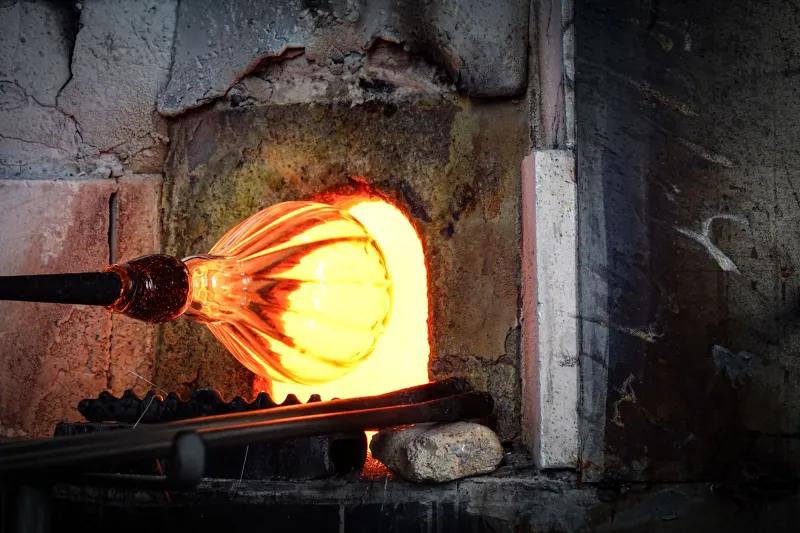
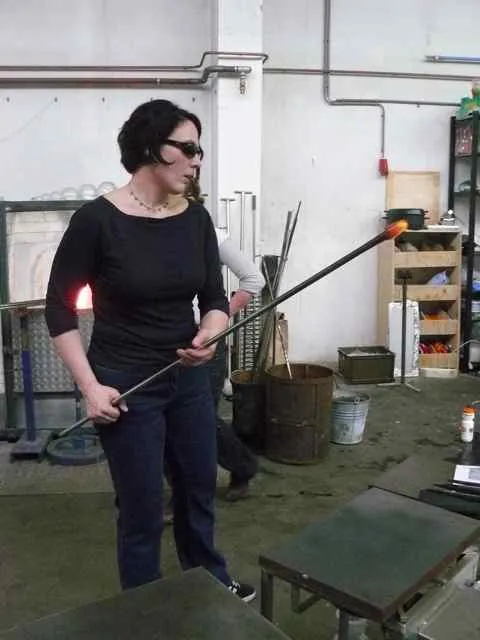
Here's something nobody tells you when you're learning to gather molten glass on a punty for the first time: the craft itself might be the smallest part of your earning potential.
That sounds almost heretical, right? But spend enough time talking to glassblowers who've actually built sustainable livelihoods — not just breakeven studios — and a pattern emerges. The ones doing well aren't just better artists. They've figured out how to translate what they know into income streams that don't require them to suit up in front of a 2,100-degree furnace every single day.
This isn't about abandoning your practice. It's about recognizing that glassblowing sits at a genuinely unusual intersection of chemistry, physics, fine art, and skilled trade — and that intersection is worth a lot more than the gallery market alone will pay you for.
Teaching Isn't Selling Out. It's Scaling Up.
Let's start with the most obvious one, because it's also the most underestimated: workshops.
The experiential economy is real and it's massive. Americans are spending more on "doing things" than "buying things," and glassblowing — with its drama, its heat, its immediate visual payoff — is practically tailor-made for that market. Introductory sessions at established studios routinely run $150 to $300 per person for a two-hour experience. Private events for bachelorette parties, corporate team-building days, and birthday groups can push that number significantly higher.
But here's where it gets interesting beyond the weekend workshop model: structured curriculum development. Glassblowers with deep technical knowledge are increasingly getting hired to design and teach multi-week intensives at community colleges, art centers, and maker spaces that don't have in-house expertise. You're not just blowing glass — you're being compensated as a subject matter expert. That's a fundamentally different financial conversation.
Some artists have taken this further by developing online course content. Video-based instruction doesn't replace hands-on learning for core skills, but it works remarkably well for the theoretical side of the craft — color chemistry, kiln programming, tool selection, studio setup. That content, once created, keeps generating income without you standing in front of a camera again.
Architecture and Interior Design: The Market Most Blowers Ignore
Commissioned art glass for residential and commercial spaces has existed forever. But there's a newer, more lucrative angle that's flying under most glassblowers' radar: consulting relationships with architecture and interior design firms.
Think about what architects and designers actually need when a project involves custom glass elements. They need someone who can tell them what's physically possible, what different techniques will produce, how light will interact with various textures and colors, and what realistic lead times and budgets look like. They need, in other words, exactly what an experienced glassblower knows.
Some artists have formalized this into paid consulting arrangements — getting brought in early in a project's design phase, before fabrication even begins. You're not necessarily making the glass yourself (though you might subcontract that work). You're being compensated for your expertise in specifying it correctly.
Hospitality design is a particularly fertile ground right now. Hotels, restaurants, and high-end retail environments are investing heavily in bespoke material elements, and glass — with its ability to be literally anything from delicate to industrial — keeps showing up on mood boards. Getting yourself known in that design community, even locally, can open doors that the gallery circuit never will.
Jewelry Designers Are Looking for You (They Just Don't Know It Yet)
The overlap between lampworking and the jewelry world is well-established — borosilicate beads have been part of the jewelry ecosystem for decades. But the collaboration opportunities between furnace glassblowers and jewelry designers are considerably less explored, and considerably more interesting.
Contemporary jewelry designers working in mixed media are increasingly drawn to glass components that can't be sourced from a catalog. Small-batch custom elements — pendants, inlays, decorative components in specific colors or forms — represent real value to designers who build their brand around uniqueness. The challenge is that most jewelry designers don't know how to find glassblowers, and most glassblowers aren't thinking of jewelry designers as potential clients.
Bridging that gap is mostly a matter of showing up where those designers congregate. Trade shows like the National Jeweler events, platforms like Faire for wholesale, and even targeted Instagram outreach can open conversations. The key is presenting yourself not as an artist selling finished pieces but as a fabricator offering custom components — a framing that fits naturally into how jewelry designers think about their supply chain.
Licensing: The Passive Income Play
This one requires some upfront investment, but the long-term math can be compelling. Glassblowers who've developed distinctive visual languages — recognizable pattern work, signature color combinations, specific formal vocabularies — have intellectual property that can be licensed.
What does that look like practically? Your surface pattern could appear on fabric, on wallpaper, on ceramics produced at scale, on packaging design. Your distinctive color palette, translated into digital assets, could be licensed to graphic designers or brand identity firms. Some artists have licensed their aesthetic to home goods manufacturers who produce glass items at a price point the artist could never reach handmade.
Licensing isn't for everyone, and protecting your IP requires some legal groundwork. But for glassblowers who've built a genuinely recognizable visual identity, it's worth understanding what that identity might be worth beyond the studio.
The Throughline: You're an Expert, Not Just a Maker
All of these opportunities share a common thread: they require reframing your identity slightly. Not abandoning it — reframing it.
Glassblowers tend to think of themselves as makers, which they absolutely are. But the most financially resilient artists in this craft have also learned to think of themselves as experts in a highly specialized technical and artistic domain. That expertise has value in contexts that have nothing to do with selling finished pieces.
The studio stays central. The furnace doesn't go cold. But the income picture gets a lot more interesting when you stop asking "who will buy my glass?" and start asking "where else does what I know have value?"
Turns out, the answer to that second question is a much longer list.
And unlike the gallery market — which is real but genuinely crowded — most of these adjacent opportunities don't have a lot of glassblowers competing for them yet. That window won't stay open forever.
Get there first.