Priced Out of the White Cube: Why Gallery Doors Stay Shut for So Many Glassblowers
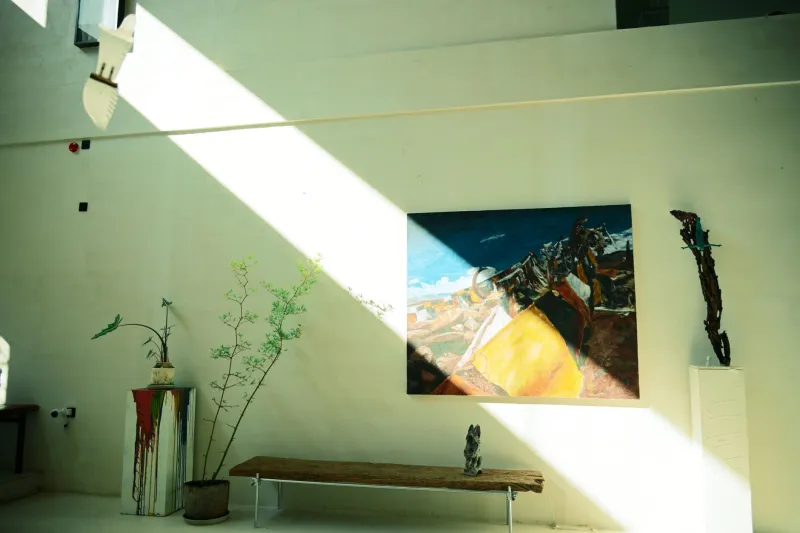
Talk to almost any serious glassblower who's been at the craft for more than a few years and you'll hear some version of the same story. The work is strong. The technique is there. The pieces sell. And yet, when they approach a fine art gallery — the kind with clean white walls, a mailing list, and a real collector base — they get politely redirected toward the craft fair circuit, the holiday market, the local art center show. Again.
It's a pattern so consistent it starts to feel less like bad luck and more like policy.
The "Craft" Label and Why It's So Hard to Shake
Here's the uncomfortable truth that most gallery insiders won't say out loud: a huge chunk of the fine art world still treats glass as a craft medium first and an art medium second. Doesn't matter if your work is conceptually sophisticated, technically groundbreaking, or sitting in a museum collection somewhere. The moment someone hears "glassblowing," a specific mental image kicks in — decorative bowls, paperweights, maybe a nice vase for a beach house. That association is stubborn, and it costs glassblowers real money and real career momentum.
Painters don't fight this battle. Neither do most sculptors working in bronze or stone. Those mediums carry an inherited cultural legitimacy that glass simply hasn't been granted at the same level, despite the fact that artists like Dale Chihuly, Lino Tagliapietra, and Dante Marioni have spent decades proving the medium can operate at the highest levels of fine art.
The Chihuly effect is actually a double-edged sword here. His work brought glassblowing into mainstream visibility in a big way, but it also cemented a particular aesthetic in the public imagination — large, colorful, ornamental installations — that makes it harder for glassblowers working in other directions to be seen clearly.
The Economics Don't Help Either
Galleries run on margin. That's just the reality. And glass creates some specific financial friction that other mediums don't.
First, there's the shipping and insurance problem. A painting can be crated and moved relatively cheaply. Glass — especially large, complex pieces — is expensive to pack, expensive to ship, and terrifying to insure. Galleries that have been burned once by a breakage situation during transit get skittish fast. Some just decide the logistical headache isn't worth it.
Then there's the price point conversation. Functional glass — even high-end functional glass — tends to sit in a price range that fine art galleries find awkward. Too expensive for casual buyers, not expensive enough to anchor a serious collector's acquisition budget. Non-functional, sculptural glass can command serious prices, but galleries often don't have the collector relationships to move it confidently.
And unlike a painter who can produce a new canvas in a few days, a glassblower's output is constrained by studio time, material costs, and the physical demands of the work. Building a body of work large enough to fill a gallery show takes real time and real investment.
The Networking Gap Nobody Wants to Admit
Fine art gallery culture runs on relationships. Who you know, who your professors knew, which residencies you attended, which critics have written about you. It's a network that was built largely around painting, drawing, and traditional sculpture programs, and it doesn't naturally include the hot shop.
Most glassblowers come up through craft-focused programs, studio apprenticeships, or community workshop pipelines. Those are legitimate and valuable paths, but they don't always connect to the gallery world's social infrastructure. You're not in the same MFA cohort as the painters who will go on to show at serious galleries. You're not at the same openings. You're not getting reviewed by the same critics.
This isn't about talent. It's about proximity to the right rooms, and glassblowers often aren't in them.
What Actually Works: Strategies From Artists Who've Broken Through
So what do glassblowers who've actually landed legitimate gallery representation have in common? A few patterns show up consistently.
They stopped leading with the process. Successful gallery artists talk about their work in terms of concept, narrative, and intention — not technique. Technique is impressive, but galleries sell ideas. If your entire pitch is about how hard it is to make your pieces, you're positioning yourself as a craftsperson. Lead with what the work is about.
They built critical infrastructure deliberately. Artist statements, press coverage, exhibition history, even a well-written website — these are the signals galleries use to assess legitimacy. Glassblowers who get taken seriously have usually invested in this kind of documentation the same way painters do.
They found galleries that already get it. Not every gallery is hostile to glass. There are dealers across the country — particularly in cities with active glass communities like Seattle, Portland, Corning, and Asheville — who understand the medium and have collectors for it. Starting with those galleries, building a track record, and then using that credibility to approach broader fine art spaces is a more realistic path than cold-pitching a Chelsea gallery with no context.
They embraced hybrid positioning. Some of the most commercially successful glass artists work strategically across multiple markets — doing gallery shows for credibility and collector development, while also maintaining a direct sales pipeline through their studio, social media, and select craft events. The goal isn't to abandon the craft world; it's to refuse to be limited to it.
They got institutional validation first. Residencies, museum acquisitions, public art commissions — these are the kinds of credentials that make gallery directors pay attention. An artist who's been collected by a regional museum or completed a public installation has cleared a credibility threshold that makes the gallery conversation easier.
The Longer Game
None of this changes overnight. The fine art world moves slowly, and its biases run deep. But the glass artists who are making real inroads aren't waiting for the system to evolve on its own — they're navigating it strategically, building the right credentials, making the right connections, and refusing to accept the craft fair ceiling as a permanent address.
The work deserves to be on those walls. Getting it there is a separate skill set, and honestly, it's one worth developing with the same intensity you'd bring to learning a new technique at the bench.