Slow Down to Cash In: The Case for Deliberate Pacing at the Furnace
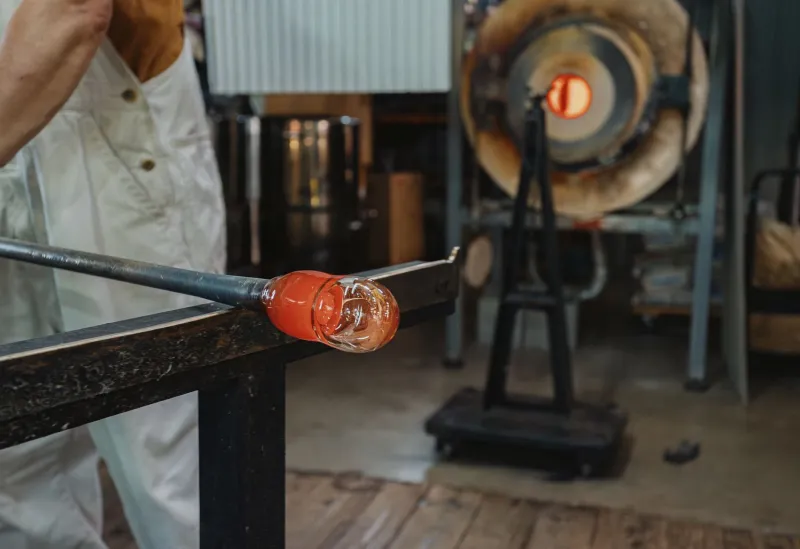
There's a certain mythology in the hot shop about speed. Watch enough glassblowing videos online and you start to think the whole craft is a race — gather fast, shape fast, hand it off before it dies on you. And sure, glass doesn't wait around. But here's what those videos rarely show: the busted pieces on the floor, the rework that ate the afternoon, the artist who's been white-knuckling it through twelve-hour sessions and wondering why their numbers still don't add up.
Talk to the studios that are actually turning a profit — consistently, year over year — and a different picture emerges. Deliberate pacing isn't just a philosophy. For a lot of them, it's a business strategy.
The Rework Problem Nobody Likes to Talk About
Here's a number that should get your attention: in production glassblowing environments, rushed work can push rejection rates into the 15–25% range depending on the complexity of the piece. That means one in five or six pieces you're burning fuel, time, and materials on never makes it to a customer. It cracks in the annealer. The symmetry's off. The color pull went sideways because you were moving too fast to catch it.
Each one of those failures isn't just a lost piece — it's a compounding loss. You've already spent the gather, the heat, the floor time. Now you're spending it again on a replacement. And if you're running a studio with employees or assistants, that rework cycle is pulling them off new production too.
Mike Hernandez, who runs a mid-size production studio outside of Asheville, North Carolina, started tracking his reject rate after a particularly brutal holiday season a few years back. "We were in full sprint mode from October through December," he says. "Fulfilling wholesale orders, doing custom work, keeping the gallery stocked. And at the end of it I sat down with the numbers and realized we'd remade almost a third of our production runs at least once. We were exhausted and we hadn't actually made more money than the previous year."
That accounting exercise changed how his studio operates.
What 'Deliberate Pacing' Actually Looks Like
It's not about working slowly in a lazy sense. Nobody's suggesting you take a nap between gathers. Deliberate pacing in glassblowing is about building structured rhythm into your sessions — something closer to the way a professional chef runs a kitchen than the way a line cook panics through a Saturday rush.
For Hernandez's studio, that meant a few concrete changes. They capped daily production targets at a number they could hit with consistent quality rather than a stretch goal that required cutting corners. They built mandatory cooling-off periods into the schedule — not just for the glass, but for the team. And they started treating the first gather of each new form as a calibration piece rather than a sellable unit.
"That first piece tells you everything," Hernandez explains. "How the batch is behaving that day, whether the temperature is where you think it is, whether your team is dialed in. If you're racing, you skip that information. Then you're making the same mistake fifty times instead of catching it once."
Over two production seasons with the new approach, his studio's reject rate dropped from around 22% to just under 8%. Output volume went down slightly — but net revenue went up because they weren't absorbing the cost of constant rework.
The Artistic Argument (Which Is Also a Financial One)
Production work and fine art glassblowing have a complicated relationship, but the pacing argument applies across both ends of the spectrum. For artists selling higher-end individual pieces, the stakes around deliberate process are even more pronounced.
Jamie Ostrowski, a studio glass artist based in the Pacific Northwest who sells through galleries and directly to collectors, describes the shift in her work after she stopped treating sessions like a production floor.
"I used to judge a good day by how many pieces I finished," she says. "Now I judge it by how many pieces I finished well. And weirdly, my income went up when I made that switch — not because I was making more pieces, but because the pieces I was making were better, and better pieces command higher prices."
This is the part of the equation that gets overlooked in the speed-versus-quality debate. It's not just about reducing errors. It's about the cumulative effect of working at a pace that allows for genuine decision-making. When you're moving fast, you're reacting. When you're moving deliberately, you're actually making choices — and those choices show up in the finished work in ways collectors and buyers can feel, even if they can't articulate exactly why.
Strategic Breaks: The Tool You're Probably Ignoring
One of the more counterintuitive findings from studios that have leaned into deliberate pacing is the role of intentional breaks — not just lunch, but structured pauses built into the flow of a session.
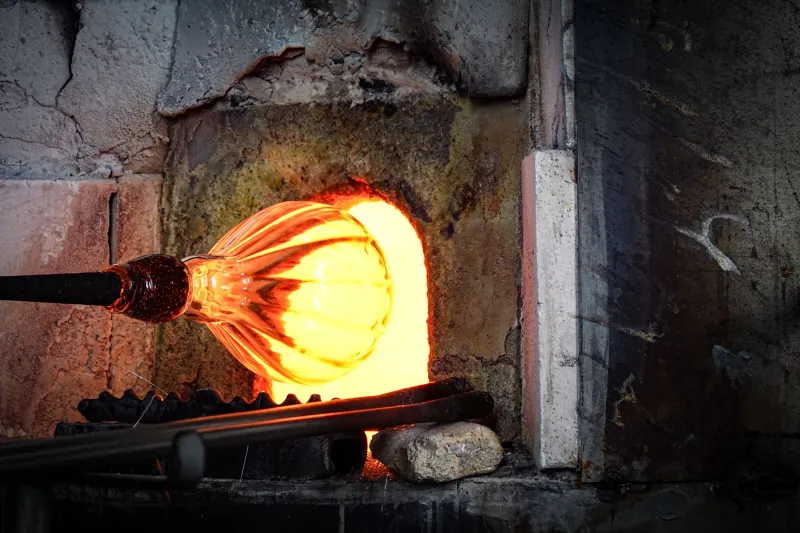
Glass is unforgiving of fatigue. The micro-decisions you make at the pipe — how much to rotate, when to let gravity do the work, how long to stay at the glory hole — require a level of attentiveness that degrades over time. Most experienced blowers know this intellectually, but the culture of the hot shop often treats breaks as weakness or lost time.
Hernandez's studio now schedules a fifteen-minute full stop every ninety minutes during production sessions. "It felt insane at first," he admits. "Like we were just throwing away time. But the quality consistency in the second half of a session improved dramatically once we started doing it. We're not dragging tired work across the finish line anymore."
The analogy to high-performance athletics isn't accidental here. Sports science has known for decades that structured recovery intervals improve output quality and reduce error rates. The hot shop, it turns out, is not exempt from basic human physiology.
Running the Numbers on Your Own Practice
If you want to test this in your own studio, start with a simple audit. For one month, track every piece you start and every piece you finish that meets your quality standard. Calculate your real rejection rate. Then track how many hours you spent on rework — remakes, touch-ups, pieces you knew were off but tried to save anyway.
That number, multiplied by your effective hourly rate, is the cost of speed. For most studios that run this exercise honestly, it's a bigger number than they expected.
From there, the experiment is straightforward: cap your daily targets slightly below your current pace, build in breaks, and treat your first piece of each form as diagnostic rather than sellable. Run it for a season and compare the numbers.
Chances are, you'll find what a lot of studios have already found — that the fastest path to the furnace paying off isn't moving faster. It's moving smarter, steadier, and with enough room in the process to actually catch your mistakes before they catch you.
The glory hole will still be hot when you get back from that fifteen-minute break. The work will be better for it.