After Midnight at the Furnace: The Late-Night Studio Movement Changing Who Gets to Make Glass
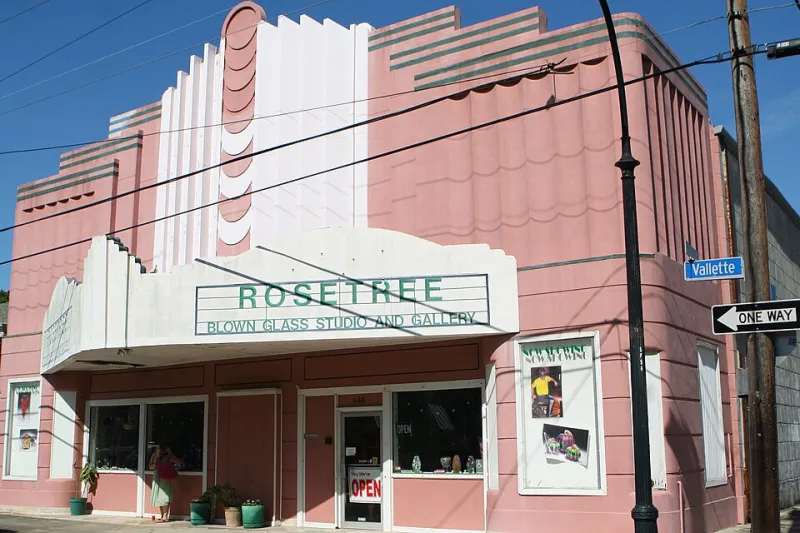
Photo: robbiesaurus, CC BY-SA 2.0, via Wikimedia Commons
Walk into most shared glassblowing studios between 9 a.m. and 5 p.m. on a weekday and you'll find a familiar pecking order. Established artists have the prime benches. Instructors run classes that eat up floor space. The furnace schedule reads like a reservation list at a hot restaurant — and if you're newer, younger, or just less connected, you're probably eating late.
Literally.
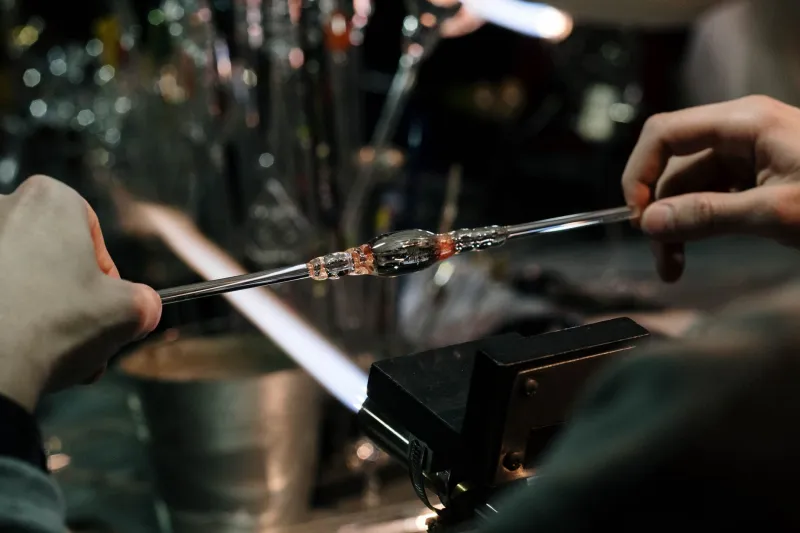
Across the country, a loosely organized wave of glassblowers is flipping that script by simply showing up when everyone else goes home. They're working midnight to 6 a.m. shifts. They're splitting access fees with rotating partners who cover different overnight windows. They're producing work — real, serious, sellable work — under fluorescent lights while the rest of the studio world sleeps. And they're doing it for reasons that go well beyond saving a few bucks on peak-hour fees.
The Economics of the Dark Hours
Let's start with the money, because that's usually where the conversation begins.
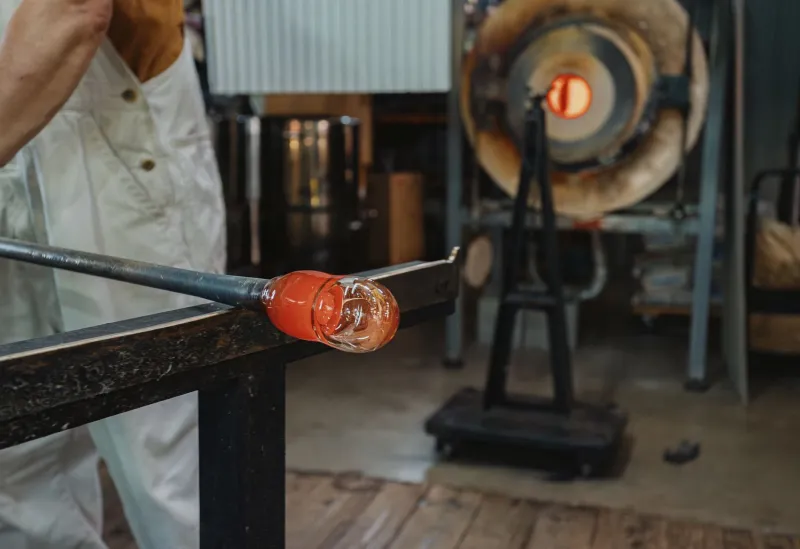
Running a glassblowing studio is expensive in ways that would make most small business owners wince. Industrial furnaces, glory holes, and annealers don't just cost a lot to build — they cost a lot to run, hour by hour, day by day. In many markets, commercial electricity rates spike during daytime demand windows, sometimes dramatically. Studios that pass those costs on to renters can charge significantly more for a Tuesday afternoon bench slot than for a 2 a.m. opening on the same equipment.
For blowers who are already stretching budgets thin — recent graduates, part-time artists juggling day jobs, makers who haven't yet cracked consistent sales — that price gap matters. A lot.
"I was doing the math one night and realized I could get almost twice as much studio time for the same monthly budget if I just shifted my schedule," says one lampworker-turned-furnace-blower based in the Pacific Northwest who asked to remain anonymous. "It felt like a hack at first. Now it just feels like Tuesday."
But the cost savings are only part of the picture.
Space, Silence, and Creative Autonomy
Talk to enough night-shift blowers and a theme emerges pretty quickly: it's not just about money. It's about the feeling of the studio when nobody else is in it.
Daytime shared studios are collaborative by design, which is mostly a feature, not a bug. You learn from watching other people work. You troubleshoot together. You build community. But that same energy can be genuinely disruptive when you're trying to push into unfamiliar territory, experiment with a technique you haven't nailed yet, or just think.
At 1 a.m., the phone isn't ringing. Nobody's asking you to move your gear so a class can set up. There's no unspoken pressure to look like you know what you're doing. The furnace hums, the glory hole glows, and the work either happens or it doesn't — without an audience.
Several night-shift blowers describe this as the condition that finally let them develop a distinct voice. The absence of daytime hierarchy — the subtle (and sometimes not-so-subtle) way that senior artists and instructors shape what feels acceptable to try — creates a kind of creative permission that's hard to manufacture during business hours.
Who's Actually Showing Up After Dark
The overnight glassblowing crowd isn't a monolith. It includes:
The day-job contingent. Plenty of serious glassblowers hold full-time jobs outside the craft. For them, overnight studio access isn't a workaround — it's the only option that makes sense. After-midnight sessions mean they don't have to choose between the furnace and a paycheck.
Parents and caregivers. Once the kids are asleep and the house is quiet, some blowers find the overnight hours are the only truly uninterrupted time they have. More than one artist has described building an entire body of work between 10 p.m. and 3 a.m. while their family slept.
Newer artists navigating studio politics. In studios with intense competition for daytime slots, less-established blowers sometimes find it's simply easier to build a reputation working nights. Without the usual social dynamics in play, the work speaks more directly.
Experimenters and risk-takers. Trying something genuinely new — a new color combination, an untested form, a technique borrowed from another discipline — feels less fraught when there's no one watching you fail. Night sessions become unofficial R&D time for artists who want to push without performing.
The Community Nobody Planned
Here's the part that surprises most people who haven't experienced it: the overnight glass world isn't lonely. It's developed its own tight, informal culture.
Night-shift blowers at shared studios tend to know each other in a particular way — not as competitors for the same resources, but as co-conspirators. When you're both there at 2 a.m. because you chose to be, there's an automatic mutual understanding. The conversations are different. The collaboration is more candid. People share techniques more freely when the stakes of the daytime economy feel far away.
Some studios have started formally acknowledging this subculture, building overnight memberships into their pricing structures and creating dedicated after-hours programming. A handful of cities with active glass scenes — Seattle, Portland, Pittsburgh, Asheville — have studios where the overnight crew has become a recognized, valued part of the community rather than a quirky footnote.
Online, the conversation is growing too. Discord servers, subreddits, and private Facebook groups have become gathering points where overnight blowers trade schedules, share work made in the small hours, and compare notes on which studios are genuinely welcoming of after-dark sessions versus which ones technically allow it but make it feel like an afterthought.
What Studios Should Be Thinking About
If you run a shared glassblowing studio and you haven't thought seriously about your overnight access model, now might be the time.
The demand is real. The population of blowers who would use late-night slots — if the pricing, safety protocols, and studio culture actually supported it — is larger than most studio managers assume. And the benefits flow both ways: studios with underutilized equipment during off-hours have an obvious financial incentive to fill those slots with paying members.
The safety question comes up every time, and it's worth taking seriously. Working alone with high-temperature equipment in the middle of the night carries genuine risk. Studios that want to support overnight access responsibly need clear check-in systems, emergency protocols, and honest conversations with members about what solo versus paired sessions should look like. Some studios require overnight workers to have a buddy present. Others use check-in apps or cameras to maintain accountability without intrusion.
Get the safety infrastructure right, and the rest tends to take care of itself.
The Furnace Doesn't Care What Time It Is
Glassblowing has always attracted people who don't fit neatly into conventional creative economies. The craft is too physical, too expensive, too demanding of specialized space and equipment to ever be fully domesticated into a nine-to-five. In some ways, the rise of the overnight studio session is just the latest expression of that same stubborn, resourceful energy.
The torch doesn't know what time it is. The glass doesn't care whether it's noon or 2 a.m. when it comes out of the furnace. And increasingly, the artists who are doing the most interesting work are the ones who figured that out — and stopped waiting for permission to show up on their own terms.