When the Heat Gets Heavy: How Glassblowers Keep Blowing as the Years Stack Up

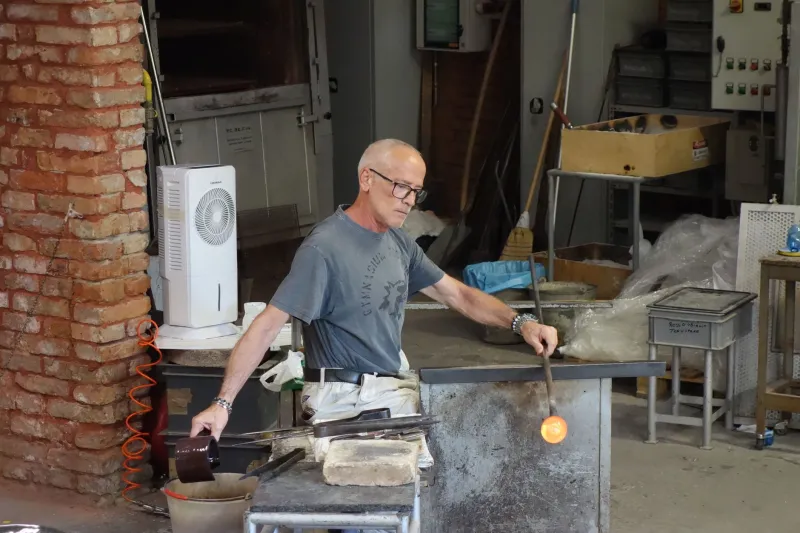
Photo: senior glassblower artist working in studio hot shop, via images.news18.com
There's a version of the glassblowing story that gets told a lot. The young artist, sleeves rolled up, pulling glowing molten glass from the furnace like it's nothing. All muscle and instinct and fire. What that story skips over — conveniently — is what happens twenty years later when those same wrists start aching before noon, when the heat that used to feel energizing starts feeling like a punishment, and when the question shifts from how do I get better to how do I keep going.
Physical limitation is the glass ceiling nobody in this craft likes to talk about. But it's real, it's coming for all of us eventually, and the artists who navigate it best are the ones who start thinking about it long before they have to.
What the Body Actually Goes Through
Let's be honest about what glassblowing demands. You're standing on concrete for hours, rotating a blowpipe that can weigh several pounds, working in ambient temperatures that regularly top 100°F near the furnace. Your shoulders, wrists, elbows, and lower back absorb repetitive strain in patterns that most sports medicine doctors rarely see outside of certain industrial occupations.
Heat tolerance is one of the first things to shift with age. The body's thermoregulatory system becomes less efficient over time, meaning older blowers often find themselves fatiguing faster in the hot shop even when their technique is sharper than ever. Cardiovascular endurance drops. Recovery time between sessions stretches out. Joint inflammation — particularly in the wrists and shoulders — becomes a constant negotiation rather than an occasional inconvenience.
Then there's the mental load. Glassblowing requires intense focus, real-time problem-solving, and the kind of spatial reasoning that doesn't exactly get easier when you're tired, overheated, and managing chronic pain. The psychological toll of feeling your body become less reliable in a craft that demands so much from it is something a lot of artists quietly struggle with.
The Adaptations That Actually Work
Here's the good news: plenty of glassblowers are figuring this out, and the solutions are more practical than you might expect.
Ergonomic equipment modifications have become a genuine area of innovation in studios across the country. Adjustable-height glory holes and marver tables — once considered luxuries — are increasingly seen as essential tools for longevity. Being able to fine-tune your working height to reduce shoulder elevation and lumbar strain isn't just comfort, it's injury prevention that compounds over years.
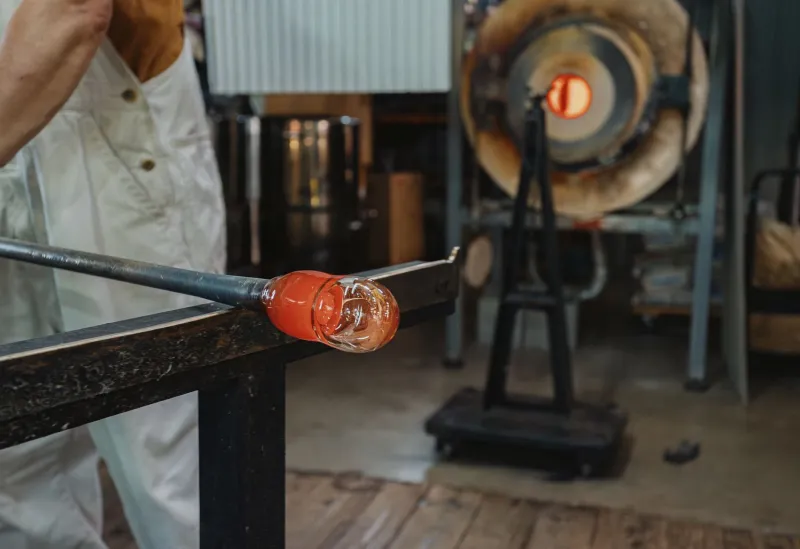
Pipe weight is another area where small changes deliver big results. Lighter borosilicate blowpipes and custom-balanced tools are helping older artists reduce cumulative strain without sacrificing control. Some studios have started investing in pipe rests and support arms that allow blowers to briefly offload the weight during longer gathers, giving tendons and muscles brief recovery windows mid-session.
Session length and scheduling are the unglamorous but arguably most effective adaptations. Artists who used to blow for six or seven hours straight are restructuring their days around two or three focused sessions with real rest in between. It feels counterintuitive — like you're doing less — but most report that their output quality actually improves when they stop grinding through fatigue.
Cooling strategies matter more than most people admit. Dedicated cooling stations near the bench, better ventilation systems, and even personal cooling vests (yes, they exist, and yes, they work) are helping blowers manage heat exposure more intelligently. Staying hydrated in a way that goes beyond just having a water bottle nearby — electrolyte management, scheduled drink breaks — makes a measurable difference in endurance and cognitive sharpness.
Reinventing the Practice
For some artists, the deeper adaptation isn't about gear — it's about rethinking what their practice actually looks like.
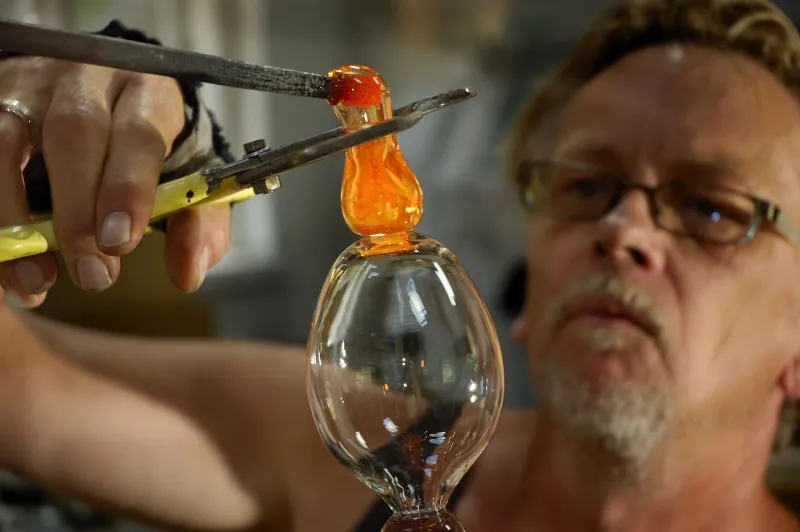
Marco Delgado, a Santa Fe-based glassblower with over three decades at the furnace, started experiencing significant shoulder deterioration in his late fifties. Rather than pushing through or walking away, he restructured his entire production model. He moved away from large-scale sculptural pieces that demanded extended overhead work and leaned into smaller, highly refined functional work — goblets, vessels, perfume bottles — that let him work in a narrower range of motion. The pivot wasn't a retreat. It became a creative rebirth. His smaller pieces now command higher per-unit prices than his large sculptures ever did.
Similarly, artists who've spent careers as primarily solo practitioners are increasingly building collaborative models into their work. Having a younger gaffer or assistant handle the heaviest physical phases — the big gathers, the sustained rotations — while the experienced artist focuses on shaping, color application, and design decisions is a working arrangement that keeps knowledge in the hot shop while distributing physical load more sustainably.
The Teaching Turn
Transitioning toward teaching is the path that comes up most often in these conversations, and it's worth examining honestly rather than just celebrating it as a graceful exit.
Teaching glassblowing is genuinely demanding work. It's not a light retirement. You're still in the hot shop, still navigating heat and noise, still physically demonstrating techniques. But the nature of the physical demand shifts. You're doing shorter demonstrations rather than sustained production sessions. You're observing and coaching more than executing. For many artists, this recalibration extends their time in the craft by years, sometimes decades.
The psychological dimension here is real, though. A lot of glassblowers tie a significant part of their identity to being makers — people who produce work, who put things into the world. Shifting into a teaching-primary role can feel like loss even when it's genuinely the right move. Artists who navigate this transition most successfully tend to be the ones who give themselves permission to grieve that shift a little before embracing what the new chapter actually offers.
Because what it offers is substantial. Experienced glassblowers carry institutional knowledge that genuinely cannot be replicated — the kind of embodied understanding of how glass moves, breathes, and behaves that only comes from thousands of hours at the furnace. Passing that on isn't a consolation prize. It's one of the most valuable contributions a craftsperson can make.
Playing the Long Game
The artists who seem to fare best across long careers share a few common traits. They pay attention to their bodies early — not just when something hurts, but as a regular practice of self-assessment. They build relationships with sports medicine professionals and physical therapists who actually understand repetitive craft strain, not just athletic injuries. They stay curious about equipment and technique adaptations rather than treating their established methods as sacred.
And maybe most importantly, they give themselves permission to evolve. The glassblower you are at sixty doesn't have to look like the one you were at thirty. The craft is deep enough, rich enough, and demanding enough that there's always more to explore — you just might be exploring it from a slightly different angle, with a lighter pipe, and a smarter schedule.
The glory hole doesn't care how old you are. But your body does, and it's worth listening.