Hot Glass, Cold Shoulders: The Unwritten Social Rules Running the American Glassblowing World

Photo: glassblowers working together in hot shop studio collaboration, via www.vanezacomz.com.br
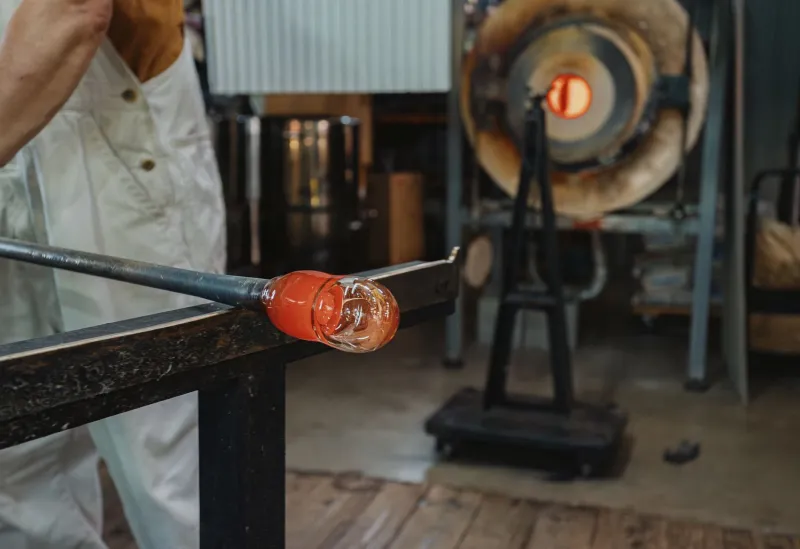
Walk into almost any working hot shop in America and you'll feel it almost immediately — a particular social temperature that has nothing to do with the 2,000-degree furnace humming in the corner. Glassblowing is a small world. Tight, interconnected, and occasionally combustible in ways that have nothing to do with molten silica. The people who thrive in it long-term will tell you the same thing: learning to read the room is just as important as learning to read the gather.
This isn't a hit piece on anybody. It's an honest look at the interpersonal landscape that shapes American glassblowing — the rivalries that push artists to do their best work, the alliances that open doors, the mentor-mentee splits that leave lasting scars, and the studio politics that quietly determine whose career catches fire and whose smolders out.
Why Glassblowing Breeds Intensity (On and Off the Pipe)
There's a reason glassblowers tend to form unusually strong bonds — and unusually charged conflicts. The craft demands physical proximity. You're working inches from someone else for hours at a stretch, reading their movements, anticipating their needs, trusting them with your safety. That kind of intimacy accelerates everything, including tension.
Add to that the competitive economics of a niche art world with limited gallery space, a small collector base, and only so many prestigious residencies to go around, and you've got a pressure cooker. "Glass is a small pond," says one Pacific Northwest-based blower who's been working professionally for over fifteen years. "Everyone knows everyone. That can be beautiful. It can also be suffocating."
Unlike, say, painting — where an artist can theoretically work in total isolation — glassblowing is almost always collaborative by necessity. Even solo artists rely on assistants, studio time at shared facilities, and the goodwill of the community to function. That interdependence raises the stakes on every relationship.
The Mentor Split: Glassblowing's Most Loaded Breakup
Ask any veteran blower about the relationship that shaped them most, and nine times out of ten they'll name a mentor. Ask them about the relationship that hurt them most, and there's a decent chance it's the same person.
The mentor-mentee dynamic in glassblowing is unusually intense compared to other crafts. Students often spend years inside a single teacher's aesthetic universe, learning not just technique but an entire worldview about what glass should be and do. When a student eventually develops their own voice — or worse, starts getting recognition that rivals their teacher's — things can get complicated fast.
"There's this unspoken expectation in a lot of studios that you'll always be the apprentice in that person's eyes, even after you've been working professionally for a decade," says one East Coast blower who asked to remain unnamed. "When I started getting into shows my mentor had been rejected from, it just... changed things. There was never a conversation about it. The coldness just appeared."
The fallout from these splits ripples outward. Mentors often have deep roots in the community — they know the gallery owners, the festival organizers, the residency directors. A souring relationship at that level can quietly close doors that were never officially open in the first place.
Studio Politics: The Art of Sharing a Hot Shop
Shared studio spaces are the economic backbone of American glassblowing. Most working artists — especially early in their careers — can't afford to build and operate their own facility. Co-op studios and rental hot shops make the craft accessible, but they also concentrate a lot of strong personalities into a small, very hot space.
Priority scheduling is probably the single biggest source of low-grade friction in shared studios. Who gets the prime evening slots? Who gets bumped when a visiting artist comes through? These decisions, often made informally by whoever holds the most social capital in a given studio, have real financial consequences for working blowers who depend on consistent production.
Then there's the question of aesthetic territory. Glassblowing communities, like most art communities, tend to develop informal hierarchies around style. When a newer artist starts working in a visual language that closely resembles an established studio member's signature work, the atmosphere can get frosty — even if the similarity is entirely coincidental.
"I had a situation where someone newer to our studio started making pieces that looked a lot like mine," recalls a Colorado-based blower. "I genuinely don't think they were copying me. They'd probably seen similar work elsewhere. But it created this weird thing where other people in the studio started treating it like a drama, taking sides. It was exhausting."
Rivalries That Actually Make Better Glass
It would be a mistake to frame all of this as purely destructive. Some of the most productive creative relationships in American glassblowing are built on a foundation of healthy competition — two artists pushing each other to go further, work harder, and take more risks.
The Pacific Northwest has historically been one of the richest ecosystems for this kind of productive rivalry, partly because of the density of serious studios in cities like Seattle and Portland and partly because of the legacy of the Pilchuck Glass School, which has been generating intense creative relationships since the early 1970s. Artists who come up together in that environment often describe a competitive energy that feels more like fuel than friction.
"The people I came up with kept me honest," says one Seattle-based blower. "If I got lazy, I knew someone I respected was in the next studio over doing something incredible. That's not a bad feeling to have."
The key distinction seems to be transparency. Rivalries that stay unspoken — where the competitive feeling exists but is never acknowledged — tend to curdle into resentment. The healthier version involves artists who can openly talk about being in competition, who can celebrate each other's wins without it feeling like a personal loss.
Navigating It All Without Losing Your Mind
So what do you actually do with all of this? A few things seem to consistently help.
Build relationships outside your immediate studio circle. The more connected you are to the broader glassblowing community — through workshops, residencies, online communities, and events like the Glass Art Society conference — the less dependent you are on any single studio's social ecosystem.
Name things when they get weird. Most studio conflicts fester because nobody wants to be the first one to acknowledge the tension. A direct, low-drama conversation early almost always beats months of silent cold war.
Protect your creative autonomy from the start. The tighter you are with a single mentor or studio community, the harder it becomes to develop your own direction without it feeling like a betrayal. Seek out multiple influences early. It protects you later.
Accept that some fallouts are just part of it. Not every professional relationship in glassblowing is going to end warmly. The craft's intimacy means the endings can sting more than they might in a less connected field. That's real. But it's also survivable.
The American glassblowing scene is, at its best, one of the more genuinely communal creative worlds you'll find anywhere. People show up for each other in ways that would surprise outsiders. But it's also human — messy, political, and occasionally petty in ways that are completely predictable once you understand the pressures everyone is working under.
The glory hole doesn't care about any of that. It just wants to know if you're ready to work.